A door handle swung too hard, an elbow during a furniture shuffle, or wall plugs yanked out after a move. However it happened, a hole in the wall is hard to ignore. Luckily, most plasterboard damage is very fixable.
Knowing how to repair holes in plasterboard comes down to matching the method to the damage. A nail hole needs a dab of filler. A fist-sized gap needs backing, a patch and more patience.
This guide covers each stage, from sizing up the damage to painting the finished repair.
Types of Plasterboard Holes and Damage
First, take a proper look at what you’re dealing with.
Small damage covers nail and screw holes, as well as dents and scratches. Small to medium holes run up to about 150 mm across, the size a door handle usually leaves. Large holes are anything bigger than that, where there’s nothing solid behind the board to fill against.
Size decides your materials. Ready-mixed fillers suit shallow damage, while anything wider than 10mm calls for a setting compound and, often, a patch.
Tools and Materials You’ll Need
Most of this kit is available at any hardware store.
- Ready-mixed filler and setting compound
- A broad filling knife and a narrower putty knife
- Fine sandpaper or a sanding block
- A utility knife and a small plasterboard saw
- A plasterboard offcut or a self-adhesive plasterboard patch kit
- Paper or mesh jointing tape
- Primer, paint, a brush and a roller
Repairing Small Holes and Dents
When you need to fix small holes in walls, the hands-on work is quick, but allow a day or two for drying.
Filling and Sanding
Trim any torn paper or loose crumbs, then sand around the hole so the filler bonds well. Press ready-mixed filler firmly into the hole and draw your knife across it, leaving the filler just proud of the surface.
These fillers shrink as they dry, so deeper dents usually need a second coat. Allow at least 24 hours between coats, then sand flush with fine sandpaper.
Finishing Coat and Smoothing
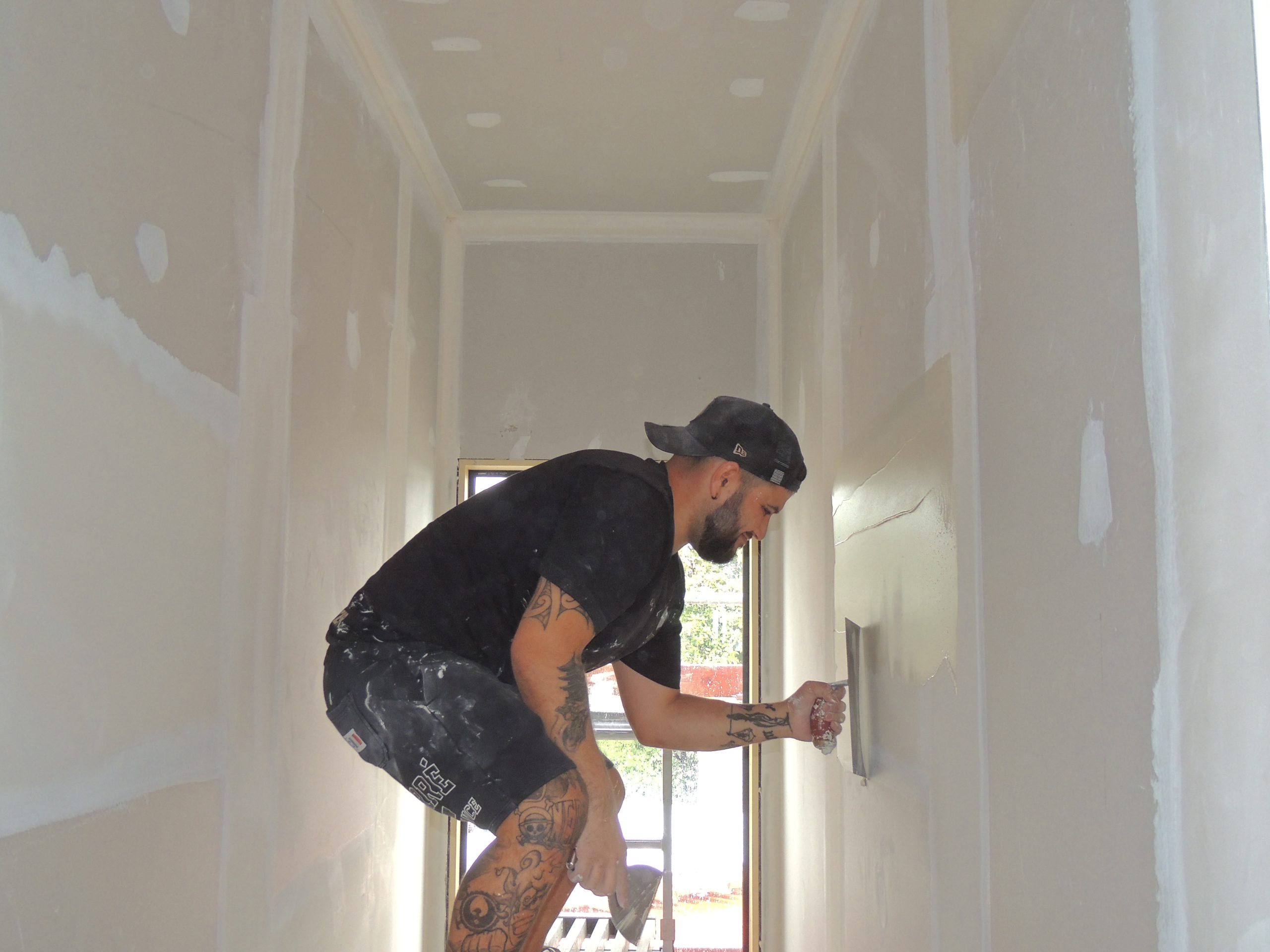
Apply a thin final coat with a broad knife, spreading it a little wider than the repair. Feathering the edges helps the patch blend in instead of leaving a visible ridge.
Sand lightly. If you can’t feel the edge, it’s ready for primer.
Repairing Medium and Large Holes
Bigger holes need something solid behind the compound; otherwise, the filler drops into the wall cavity.
Patching and Backing Methods
For a modest hole, a self-adhesive mesh or metal patch is often the quickest plasterboard hole repair. Clean around the hole, press the patch on firmly, and you’re ready for the compound.
For holes up to 150 mm, cut the damage into a neat rectangle. Coat the ends of a plasterboard offcut that is about 20 mm longer than the opening, then slip it through as backing and pull it tight using a nail as a handle. Once hard, fix a patch to it.
For bigger holes, cut the board back to the nearest studs and fix a new piece to the framing. It’s the same principle you’d use to patch a drywall hole, just on a bigger scale.
Taping, Jointing and Feathering
Bed paper jointing tape over every seam in a layer of setting compound. Setting compounds shrink far less than ready-mixed fillers, making them the better base coat for larger repairs.
Once it’s hard, add a wider second coat and feather the edges. Leave it at least 24 hours, scrape off any rough edges, then apply a thin finishing coat and sand smooth.
Priming and Painting the Repair
Skipping primer is the fastest way to spoil a decent repair. Fresh compound absorbs paint differently from the rest of the wall, leaving a dull patch that shows up in certain light. Roll primer sealer over the repair and let it dry. Then paint the wall corner to corner rather than dabbing at the patch.
Common Mistakes and When to Call a Plasterer
Most failed repairs come down to rushing.
- One thick coat of filler instead of several thin ones
- Sanding before the compound is completely dry
- No backing on holes too big for filler alone
- Painting over bare compound without primer
Some jobs suit a professional better. Water-damaged boards, recurring cracks, holes near wiring or plumbing, and ceiling damage all need a professional touch. Fire-rated walls also need specialist repair, as standard DIY methods aren’t suitable. Experienced plasterers in NZ can also match textured finishes that are hard to replicate.
If you’d rather hand it over, our team can repair and fix holes in walls across Wellington and the Hutt Valley.
Frequently Asked Questions
How do you fix a hole in plasterboard?
Small holes need filler, sanding and a finishing coat. Larger holes need a backing piece or patch, jointing tape and several thin coats of compound, followed by primer and paint.
Can you repair a large hole in plasterboard yourself?
Yes, if you're comfortable cutting plasterboard and working with compound. Very large holes, or damage near pipes and wiring, are safer left to a plasterer.
What is the best filler for plasterboard holes?
Ready-mixed filler suits dents, scratches and small holes. For holes wider than about 10 mm, a setting compound works better because it shrinks far less.
How long does a plasterboard repair take to dry?
Setting compounds harden in roughly 10 to 30 minutes, but air-drying fillers need at least 24 hours between coats, longer in cold or damp conditions. Most repairs take a few days from start to finish.
How much does a plasterer charge to fix a hole?
Pricing depends on the size and number of holes, access and the finish required. Ask a local plasterer for a quote based on photos or a site visit.